
Whole Life Insurance vs Indexed Universal Life Insurance
Both products provide protection but work differently
6/5/2026
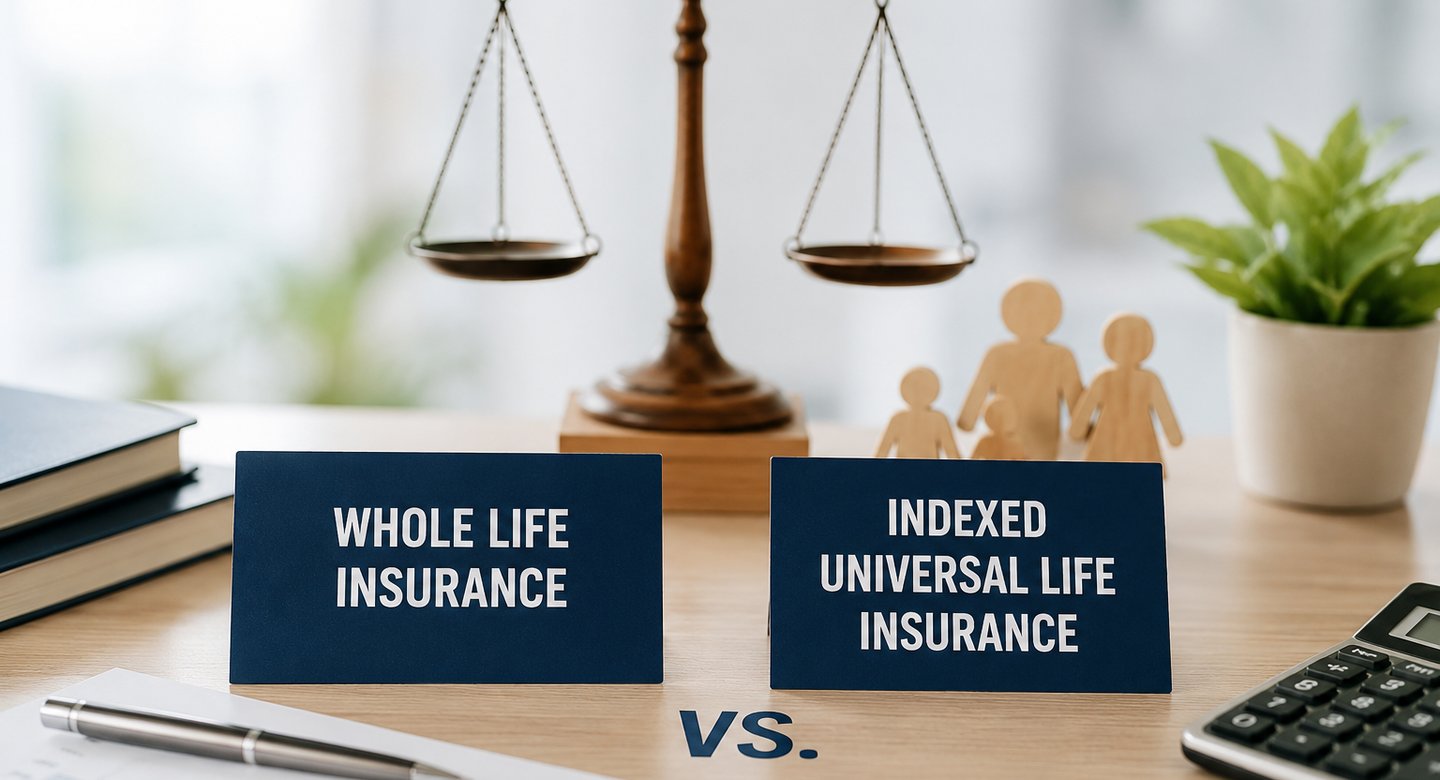
When researching permanent life insurance options, you'll often come across whole life insurance and indexed universal life insurance (IUL). Both are forms of permanent life insurance that include a cash value component, but they operate differently and may be appropriate for different financial objectives. Understanding the features, benefits, limitations, and tradeoffs of each can help you make a more informed decision.
Guarantees and Policy Structure: Stability vs. Flexibility
Whole life insurance is often chosen for its guarantees and predictability. These policies generally feature fixed premiums, a guaranteed death benefit, and guaranteed cash value accumulation as outlined in the policy contract. Some whole life policies may also be eligible to receive dividends; however, dividends are not guaranteed and may vary based on the insurer's experience and financial performance.
Indexed universal life insurance offers greater flexibility in policy design. Depending on the policy and carrier guidelines, premium payments and death benefit options may be adjusted over time. Cash value growth is tied in part to the performance of a market index, such as the S&P 500, through an index crediting strategy. Policy values are not directly invested in the stock market. Interest credits are subject to factors such as caps, participation rates, spreads, and policy expenses. While many IUL policies include a floor that can help limit the impact of negative index performance, policy values may still be affected by policy charges and other factors.
Cash Value Growth: Different Approaches
Both whole life insurance and indexed universal life insurance can accumulate cash value over time. With whole life insurance, cash value growth is based on contractual guarantees and, where applicable, non-guaranteed dividends. This may appeal to individuals who prefer a more predictable approach.
IUL cash value growth depends on the policy's index crediting method and other policy provisions. In years when index performance is favorable, credited interest may exceed that of some other permanent life insurance products. However, future performance is not guaranteed. Actual policy results will vary based on factors including index performance, policy expenses, crediting rates, premium funding levels, and policy management.
Any policy illustrations or projections provided are hypothetical and are not guarantees of future performance. Actual results may be higher or lower than illustrated.
Premiums, Policy Management, and Living Benefits
Whole life insurance generally requires fixed premium payments designed to support the policy's guarantees. Indexed universal life insurance typically offers more flexibility in premium funding, subject to policy requirements and carrier guidelines.
Because IUL policies rely on sufficient policy value to cover ongoing costs, inadequate funding may increase the risk that a policy could lapse. Policyowners should regularly review their policies and work with a qualified insurance professional to monitor performance and funding levels.
Many permanent life insurance policies, including whole life and IUL, may offer features such as policy loans, withdrawals, and accelerated death benefit riders, subject to eligibility requirements and carrier-specific terms. Loans and withdrawals may reduce policy values and the death benefit and could have tax consequences. Accelerated death benefit riders may not be available in all states and may be subject to additional limitations and conditions.
Choosing the Right Option
There is no single life insurance solution that is appropriate for everyone. The suitability of a policy depends on factors such as financial goals, risk tolerance, time horizon, age, health, and overall financial circumstances.
Comparing multiple policy options and reviewing both guaranteed and non-guaranteed elements can help provide a clearer understanding of how different products may align with your objectives. Working with a licensed insurance professional can help you evaluate available options and understand the benefits, limitations, costs, and risks associated with each policy type.
Choosing between whole life insurance and indexed universal life insurance involves evaluating the balance between guarantees, flexibility, and potential cash value growth. Each policy type has unique characteristics that may appeal to different individuals and financial situations.
Before making a decision, carefully review policy details, illustrations, costs, and contractual guarantees. A licensed insurance professional can help explain the differences among available options and assist you in determining which approach may be appropriate for your needs and objectives.
This content is for educational purposes only and is not intended as financial, tax, or legal advice.
Get Financial Insights Delivered to Your Inbox
Receive educational content, updates, and ideas designed to help you make more informed decisions for your future.
Helping You Make Informed Decisions
We believe clients should fully understand their options before making an important financial decision. Explore videos covering retirement planning, policy design, tax-advantaged strategies, family protection, and the concepts behind properly structured life insurance solutions.


Lenhoff Financial
Lenhoff Financial Inc.
8540 Executive Woods Drive Suite 501
Lincoln, NE 68512
Contact
Newsletter
Email: info@lenhofffinancial.com
(402) 413-1351
Copyright © 2024 Lenhoff Financial Inc. All rights reserved.