
What Properly Structured Really Means in an Indexed Universal Life Policy
Proper structure often depends on goals, funding, and flexibility
6/11/2026
If you've looked into indexed universal life insurance (IUL) or cash value life insurance recently, you've likely encountered the phrase "properly structured IUL." But what does that actually mean? Whether you're seeking protection, flexibility, or potential long-term value, the way an IUL is designed can make a significant difference in how it may align with your goals.
At Lenhoff Financial, our independent brokerage works with clients who want more than a basic explanation. They want to understand the mechanics behind IUL structuring and how it may fit their unique circumstances. In this article, we'll explore the key elements that go into structuring an indexed universal life policy, including premium funding, death benefit design, and long-term cash value planning. We'll also discuss why structure matters and how working with an independent broker can help you compare and customize your options across multiple carriers.
Properly Structured IUL: Why Structure Matters
An indexed universal life policy offers flexibility, but the way it is designed can have a significant impact on how it performs over time. The term "properly structured IUL" generally refers to designing a policy around an individual's goals, funding ability, and insurance needs rather than using a one-size-fits-all approach. A policy that may be appropriate for one person may not be appropriate for another.
Areas that commonly influence policy design include:
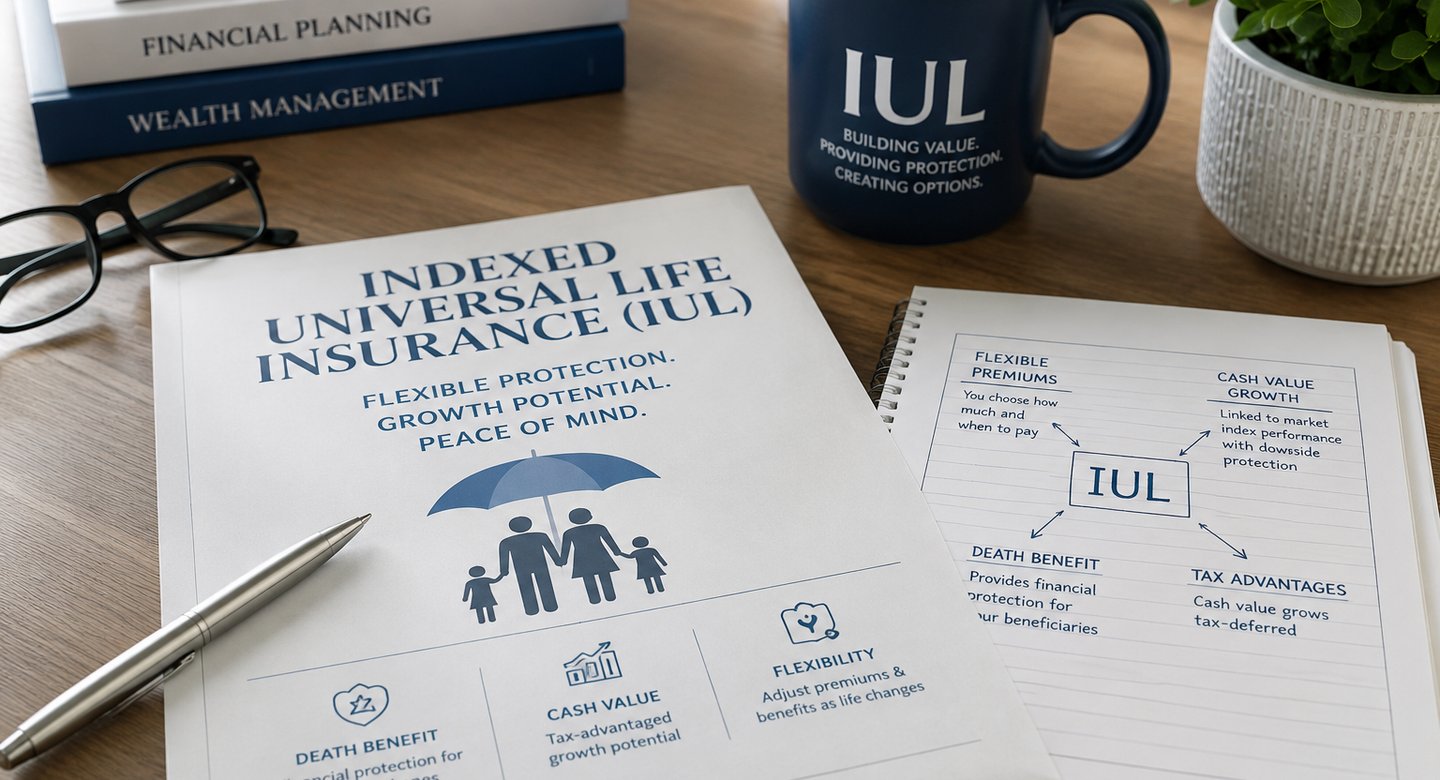
Premium funding: How much premium is contributed and over what period of time
Death benefit design: The amount and type of death benefit selected
Cash value objectives: The balance between policy protection and cash value accumulation
Flexibility: The ability to adjust premiums or benefits as circumstances change
Depending on an individual's objectives, an IUL may be designed to emphasize death benefit protection, cash value accumulation, or a combination of both. The appropriate design depends on the policy owner's goals and financial situation.
Premium Funding and Cash Value Accumulation
One of the defining characteristics of indexed universal life insurance is premium flexibility. Unlike some other forms of permanent life insurance, policyholders may have flexibility regarding premium contributions within policy and regulatory limits.
Individuals who prioritize cash value accumulation may choose to contribute higher premium amounts while staying within applicable IRS guidelines. In some cases, this can increase the portion of premium allocated toward cash value rather than insurance costs. However, the appropriate funding level varies from person to person.
Funding decisions should take into account budget considerations, long-term objectives, and overall financial planning needs. In addition, exceeding certain funding limits may cause a policy to be classified as a Modified Endowment Contract (MEC), which can change the tax treatment of policy distributions.
Because funding decisions can have long-term implications, it is important to review various scenarios and understand the potential advantages and tradeoffs before implementing a strategy.
Death Benefit Design and Policy Flexibility
Death benefit design is another important component of structuring an indexed universal life policy. Some individuals may prefer a design that emphasizes cash value accumulation, while others may prioritize a larger death benefit for family protection, estate planning, or business planning purposes.
The relationship between premium funding, death benefit amounts, and policy costs can affect how a policy develops over time. As a result, careful planning and illustration review are important when evaluating available options.
Policy flexibility may also be a consideration. Depending on the carrier and policy provisions, adjustments to premiums or death benefits may be available in the future, subject to policy requirements and underwriting considerations.
Working with an independent brokerage can provide access to multiple carriers and product designs, allowing individuals to compare features, costs, and policy provisions across a range of options. Reviewing illustrations and understanding both the potential benefits and limitations of a policy are important steps in the decision-making process.
Important Considerations and Limitations
There is no single definition of a "perfect" IUL structure. Appropriate policy design depends on factors such as age, health, financial objectives, funding capacity, risk tolerance, and insurance needs.
Policy illustrations are hypothetical and are not guarantees of future performance. Actual results will vary and may be affected by factors including credited interest rates, policy expenses, cost of insurance charges, premium payment patterns, policy loans, withdrawals, and other variables.
Before purchasing any life insurance policy, individuals should carefully review all policy materials and consult with qualified professionals regarding how the policy may fit into their overall financial strategy.
This content is for educational purposes only and is not intended as financial, tax, or legal advice.
Get Financial Insights Delivered to Your Inbox
Receive educational content, updates, and ideas designed to help you make more informed decisions for your future.
Helping You Make Informed Decisions
We believe clients should fully understand their options before making an important financial decision. Explore videos covering retirement planning, policy design, tax-advantaged strategies, family protection, and the concepts behind properly structured life insurance solutions.


Lenhoff Financial
Lenhoff Financial Inc.
8540 Executive Woods Drive Suite 501
Lincoln, NE 68512
Contact
Newsletter
Email: info@lenhofffinancial.com
(402) 413-1351
Copyright © 2024 Lenhoff Financial Inc. All rights reserved.